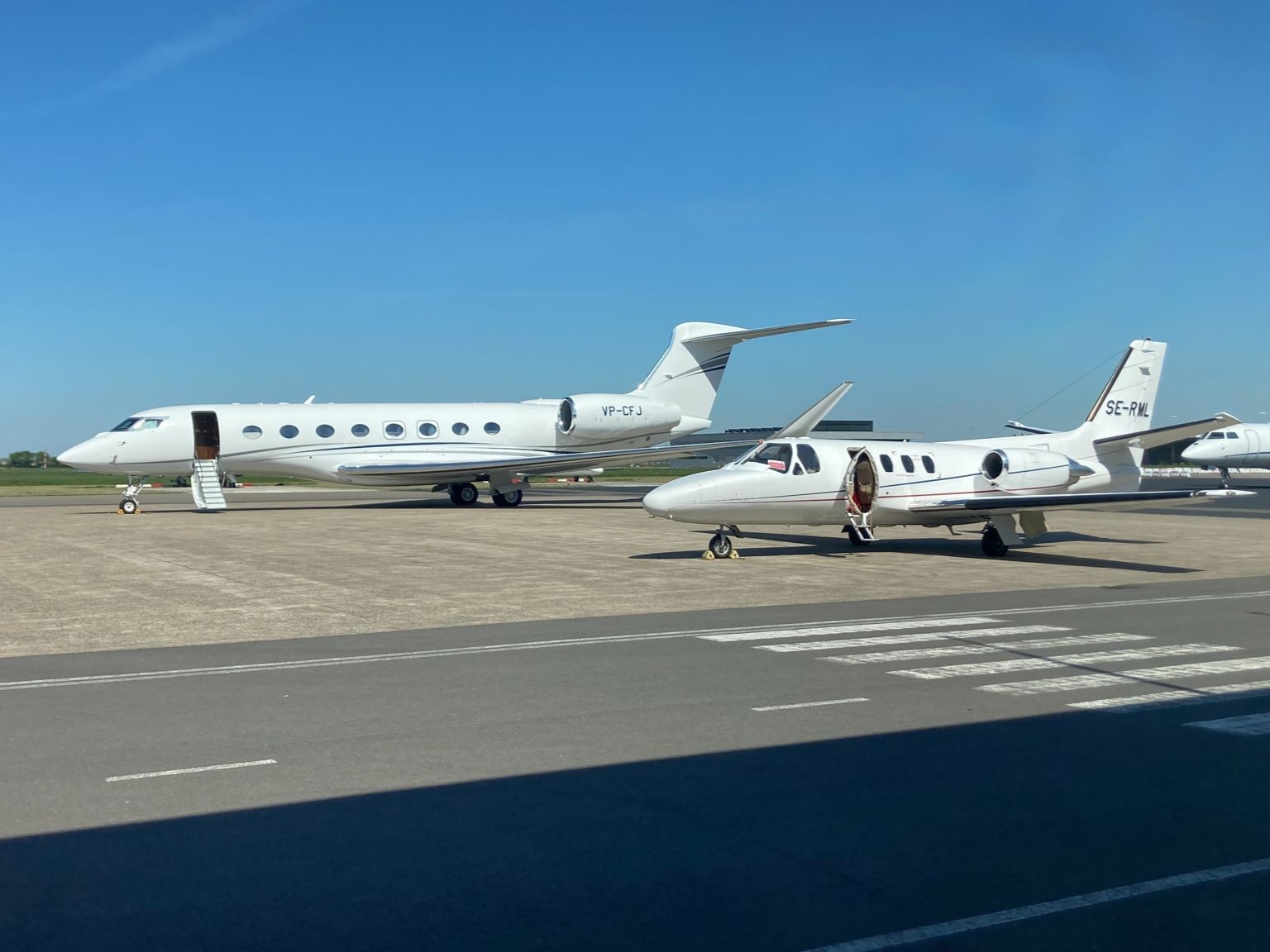
Rotterdam The Hague Airport is one of the most practical airports in the Netherlands for private jet travel. Serving both Rotterdam and The Hague, it offers a more compact and direct airport environment than a major hub, while still providing the facilities and handling standards expected for business aviation. For passengers travelling within the Randstad, the airport combines a convenient location with a dedicated private aviation setup, making it a strong option for both corporate and leisure itineraries.
Geographically, the airport is well placed for a wide part of the Dutch market. It serves the Rotterdam-The Hague metropolitan region and provides efficient access not only to both cities, but also to Delft, Westland, Gouda and other business and residential areas in the western Netherlands. That regional position is one of its main advantages. For many travellers, Rotterdam The Hague Airport offers a shorter ground transfer and a more straightforward airport experience than larger airports elsewhere in the country.
Ground accessibility is another clear strength. The airport is easy to reach by car and public transport. According to the airport, Rotterdam Central Station can be reached in around 30 minutes by metro line E and bus 33, while The Hague Central Station can also be reached in roughly 30 minutes using the same connection. Taxi facilities are located directly next to the airport building, and road access is simple for chauffeur-driven transfers. For private jet passengers, this creates a very efficient door-to-door travel profile, particularly for short European business trips where total journey time matters as much as the flight itself.
For business aviation, Rotterdam The Hague Airport benefits from a dedicated FBO presence. Jet Aviation operates the Rotterdam FBO and handles business, corporate, private and governmental general aviation traffic. The FBO is available 24 hours a day, with PPR between 23:00 and 06:00, and offers a service profile tailored to private jet operations. According to Jet Aviation, the facility includes executive and crew lounges, on-site immigration and customs clearance, transportation, hotel and catering coordination, as well as aircraft cleaning, de-icing and refuelling. Jet Aviation also completed a full renovation of the Rotterdam FBO in 2025, including upgraded customer and crew areas, which further supports a polished and efficient handling experience.
From a passenger point of view, Rotterdam works particularly well because of its scale. The airport is smaller and easier to navigate than a large international hub, yet still offers the professionalism and structure needed for private aviation. That often means shorter distances on the ground, a more direct transition between car, lounge and aircraft, and a generally calmer airport environment. For executives, entrepreneurs and families who value speed and discretion, those practical details make a real difference.
Operationally, Rotterdam The Hague Airport has one runway: 06/24. The runway is 2,200 metres long and 45 metres wide. Both directions are instrument runways, and the airport’s documentation notes that runway 06 and runway 24 are equipped to support instrument approaches. This runway length makes the airport very suitable for a broad range of private aircraft, especially for European sectors and regional business aviation movements.
In practical terms, aircraft such as the Pilatus PC-12, Beechcraft King Air, Cessna Citation CJ series, Embraer Phenom 300, Learjet 75 and Cessna Citation XLS are all natural fits for Rotterdam The Hague Airport. These aircraft types are commonly used for private flights within the Netherlands, the UK and across Europe, and they match the airport’s compact and efficient profile well. Midsize and certain super-midsize business jets may also be suitable, depending on passenger load, sector length, weather and the operator’s performance calculations on the day of operation.
The runway profile also means that Rotterdam is often especially attractive for short to medium-range private jet travel. For flights to London, Geneva, Nice, Ibiza, Milan, Zurich or other common European destinations, the airport can be an excellent operational match. For larger long-range aircraft, runway performance and payload become more relevant, so the most suitable solution will always depend on the specific mission. In some cases, a larger airport may be more appropriate for the heaviest long-range aircraft, while in many other cases Rotterdam remains a highly efficient option for typical European private aviation use.
There are a few operational planning points to bear in mind. Rotterdam The Hague Airport states that all visiting aircraft require handling, and the airport’s charges summary also notes that general and business aviation flights are linked to slot and handling procedures. In practice, this is standard for a professionally managed airport environment and is something a charter broker or operator will coordinate as part of the flight planning process. For the passenger, it simply means the journey remains well organised and properly handled from arrival to departure.
Overall, Rotterdam The Hague Airport is a strong choice for private jet travel in the Netherlands. It offers a dedicated FBO, a compact and efficient airport layout, good access to Rotterdam and The Hague, and runway infrastructure that suits a wide range of turboprops and business jets. For clients travelling within the Randstad or looking for a practical alternative to a larger hub airport, Rotterdam provides a very balanced combination of convenience, discretion and operational efficiency.
If you are planning a private jet flight to or from Rotterdam The Hague Airport, the most suitable aircraft will depend on the route, number of passengers, baggage profile and cabin preference. JetServiceNL will be pleased to advise on the most suitable options for your itinerary.
Office
JetServiceNL BV · Member of JSNL Group BV
Winthontlaan 200
3526KV UTRECHT
The Netherlands
Company registration: 65493257
VAT number: NL856134624B01
Contact
T: +31 85 303 1474



JetServiceNL BV is member of:

© 2026 - JetServiceNL BV, The Netherlands
|
|
Services
Ad-hoc private charters
Group charters
Medical flights
Broker desk
Jet card & participation
Aircraft managment and leasing