
Songshan saves ground time; Taoyuan provides more operating margin
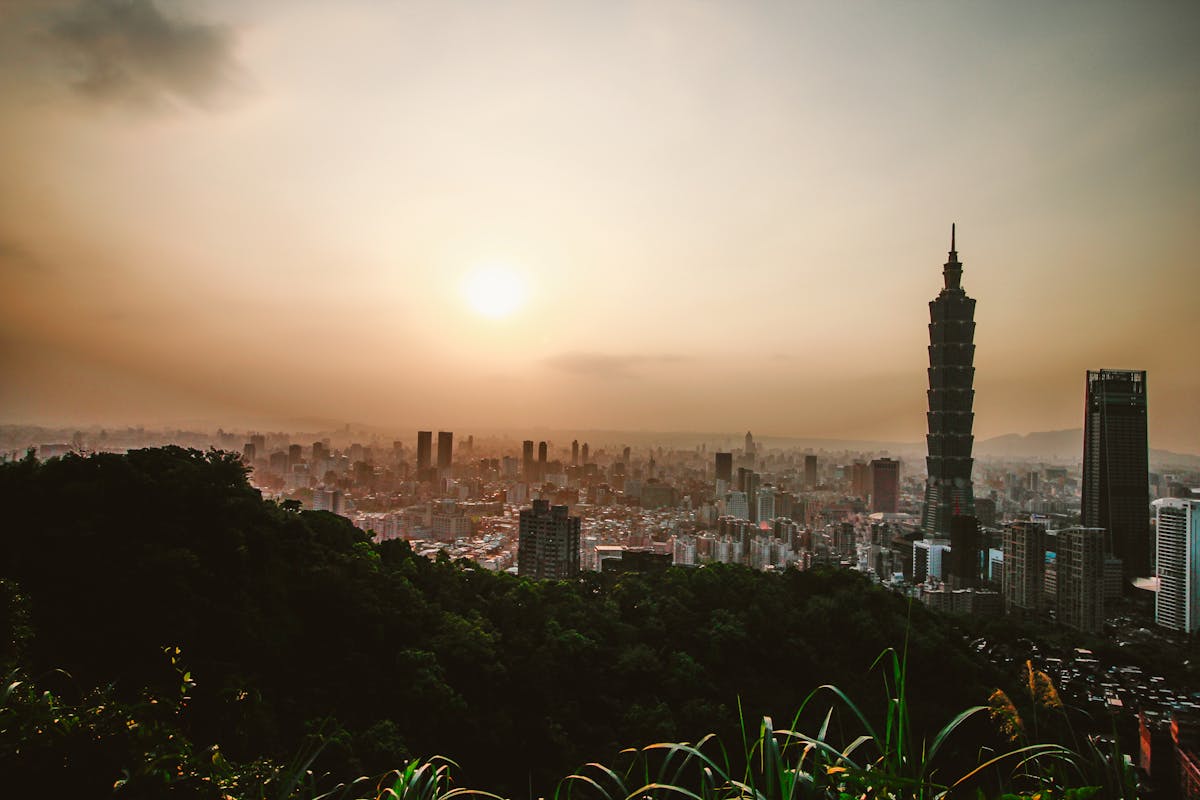
Taipei Songshan Airport (TSA / RCSS) is especially attractive for private aviation because it is effectively inside the city. Taiwan's current AIP places the airport only a few kilometres from central Taipei and publishes a 2,605 × 60 metre runway. Passengers and crew on international business-charter and private-aircraft movements must use the Business Aviation Center for customs clearance. For meetings in Songshan, Zhongshan, Da’an or Xinyi, this can create a substantial door-to-door advantage.
Taiwan Taoyuan International Airport (TPE / RCTP) lies about 30.9 km west of Taipei according to the AIP. In return, it offers two much longer runways of 3,660 and 3,800 metres and H24 airport administration, customs, ATS, fuel and handling. For a heavily loaded long-range aircraft, a late arrival, greater performance margin or insufficient space at Songshan, Taoyuan can therefore be the better choice even with the longer chauffeur transfer.
We only select the airport once the hotel, office address and required timings are known. The city airport is an advantage only when the aircraft, operating window and ground journey all fit.
Songshan has a hard night limit and Taiwan requires prior permission
Songshan is not an H24 business airport. The AIP prohibits civil take-offs and landings every day between 1500 and 2200 UTC, which is 23:00–06:00 local time. The airport website publishes general opening hours of 05:00–23:00. For flight planning we therefore treat 23:00 as a hard limit for normal civil movements and build sufficient margin for an overrunning meeting, traffic and handling.
Taiwan also requires prior permission for private and non-scheduled international operations. The application timeline depends on the legal nature of the flight and the operator. We therefore establish permit, handler, parking and airport acceptance early with the operating AOC holder.
Songshan is also designated a special airport because of terrain and obstacles. The AIP requires published climb gradients to be followed strictly. For a long-range business jet, the operator and crew therefore verify take-off performance, weight, temperature and runway direction. Songshan does not offer the same margin as Taoyuan's 3,800 metres.
At almost 5,100 nm, the mission needs more than brochure range
Amsterdam–Taipei is a serious long-range sector at about 5,099 nautical miles. A Heavy Jet can be a good solution under suitable conditions; an Ultra Long Range Jet gives additional margin for payload, headwinds, reserves and sleeping comfort. Aircraft guidance is therefore based on the real passenger and baggage load, forecast winds, alternates, crew duty and the selected airport.
Songshan and Taoyuan can produce a different performance picture for the same aircraft. At Songshan we focus more on landing and departure margins; at Taoyuan runway length is less likely to limit the mission. Availability and empty positioning matter too: a well-positioned Heavy Jet can make more sense than a ULR aircraft arriving empty from far away.
Business trips can involve samples or technical equipment, so baggage detail is needed before aircraft are requested. At close to twelve hours block time, sleeping configuration, workspace, cabin height and connectivity also matter much more than on a European sector.
The best plan starts with the address and ends with the return flight
Songshan is strongest when the programme is centred on Taipei itself. Hotels and business addresses in Songshan, Zhongshan, Da’an and Xinyi can be reached quickly; Taoyuan deliberately requires more road margin. For a departure after dinner or a final meeting, we therefore work backwards from the latest normal Songshan movement. If that creates too little margin, Taoyuan can produce the more reliable schedule.
Summer and early autumn can bring typhoons. When a relevant system develops, the operator and handler check current NOTAMs, weather, parking and crew planning. The aim is an itinerary that remains realistic for the actual travel date.
The charter price combines flying hours, positioning, handling, airport charges, crew, possible overnight costs and the return structure. The aircraft may remain in Taiwan, leave for another assignment or reposition back for the return. If the destination area is already known, you may share it later or include it voluntarily for more tailored airport and transfer advice.