
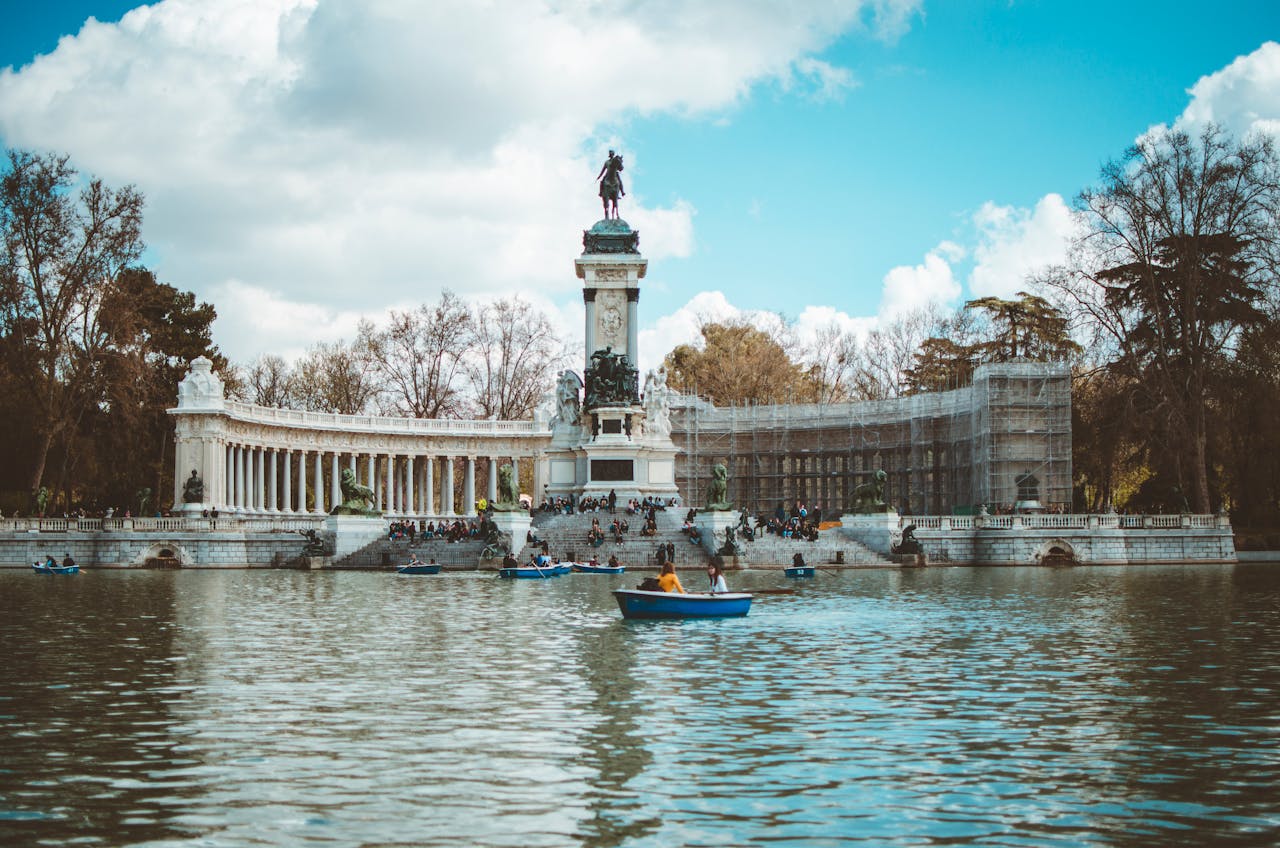
Flying privately to Madrid
Madrid is a comfortable private-jet sector from the Netherlands at roughly two and a half hours. The city is large enough for ground-transfer planning to matter, yet compact enough to combine a flight, several meetings and dinner in a single day. For corporate travel to Castellana, Salamanca or the financial district, private aviation mainly saves time by building the departure, passenger list and return flight around the agenda.
Madrid-Barajas as the first choice
For a normal business-jet charter our first reference is Adolfo Suárez Madrid-Barajas Airport (MAD / LEMD). It is a major international airport with the infrastructure, runway length and border facilities required by a wide range of private jets. That makes Barajas suitable for anything from a short European light-jet sector to a larger aircraft arriving from the Middle East or the United States.
Madrid also has Cuatro Vientos, much closer to the centre. Its location can look attractive when comparing airports, but Aena describes the airfield primarily as a general-aviation airport with VFR traffic and small aircraft. For a normal international IFR business-jet charter it is therefore not an automatic substitute for Barajas. That distinction avoids recommending an airport that looks ideal on a map but does not fit the actual mission.
Which aircraft suits Amsterdam – Madrid?
A light or super light jet is normally the best starting point. With two to four passengers a light jet offers a good balance of speed, comfort and charter cost. For five to seven travellers, additional baggage or a preference for more cabin space, we can include larger light-jet variants or midsize options. Runway length at Barajas is not a limiting factor for the normal business-jet categories used on this route.
Positioning can have a surprisingly large influence on the price. An aircraft already in Amsterdam, Rotterdam, Antwerp or Düsseldorf may work out better than a lower hourly rate on a jet that first needs to fly empty from another base. We therefore compare the complete mission rather than a nominal hourly figure.
Planning at a major hub
Barajas is one of Europe’s large airline hubs. For private aviation this means slots, handling and traffic levels form part of the planning. That does not make a private flight difficult, but it is a different operating environment from a small dedicated business-aviation airport. For an important meeting we prefer sensible margin over a schedule that only works if every element runs to the minute.
Demand for business jets and parking can rise around football matches, major conferences, exhibitions and holidays. A late return after a match also needs to be realistic in relation to crew duty and airport handling. Booking early in such periods mainly increases the choice of well-positioned aircraft.
From Barajas to central Madrid
The drive to central districts such as Salamanca, Retiro and Centro is generally manageable outside the heaviest traffic, but Madrid has pronounced morning and evening peaks. Offices along Paseo de la Castellana and in AZCA benefit from Barajas being on the northern side of the city. Meetings in Pozuelo or La Finca to the west require more ground time.
Where to stay in Madrid
For an upscale business stay, Rosewood Villa Magna on Paseo de la Castellana, Four Seasons Hotel Madrid at Canalejas and Mandarin Oriental Ritz beside the Prado are logical choices. Salamanca works well for restaurants, boutiques and quiet residential streets; Centro and Las Letras are better when historic Madrid and culture matter. Travellers with several appointments can reduce unnecessary driving by grouping hotel and meetings in the same part of the city.
Madrid is also one of Europe’s strongest dining cities. Mercado de San Miguel is famous but busy, while Salamanca, Chamberí and Las Letras often fit a longer lunch or dinner more naturally into a corporate schedule. The Prado, Thyssen-Bornemisza, Retiro and Royal Palace make it easy to add a worthwhile leisure day without leaving the city.
Season and events
Spring and autumn are often the most comfortable seasons for a city break. July and August can be very hot, while winter is typically drier and cooler. Major Real Madrid or Atlético matches, international sporting events and business fairs can increase charter demand. At those times a flexible departure window can be more valuable than chasing the very lowest headline rate.
What determines the charter price?
For Amsterdam – Madrid, the charter price is driven mainly by the available light or super light jet, its positioning, airport handling, chosen schedule and length of stay. When the separate Destination Pricing snapshot contains enough recent comparable flights, the page can show an indication for that same category. Without sufficient data we do not force a price onto the page; we return current aircraft options after the request.