
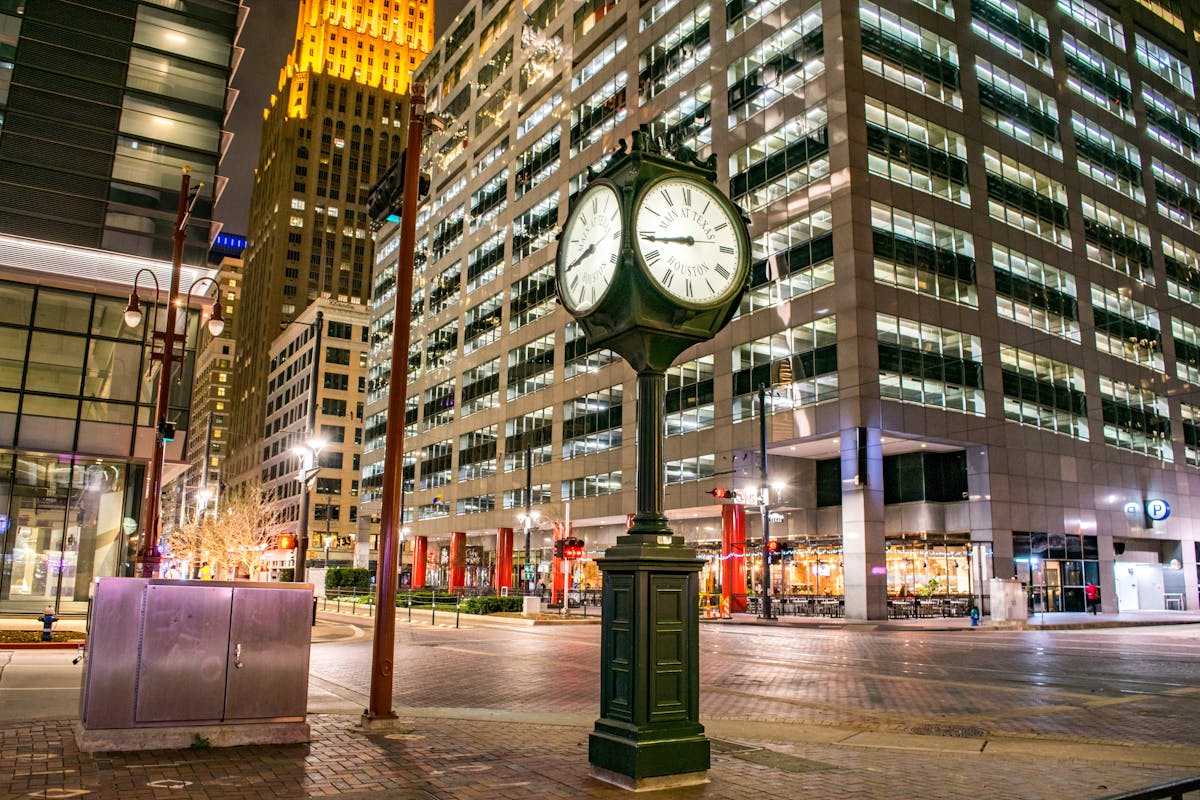
A calm arrival through Sugar Land Regional
For a private flight to Houston, Sugar Land Regional Airport (SGR / KSGR) is often our first reference point. The airport sits southwest of the city and is focused primarily on corporate and private aviation. That difference is noticeable after landing: instead of entering a large airline terminal, passengers are handled through GlobalSelect, the airport's own FBO. Its spacious terminal offers lounges, meeting rooms and dedicated facilities for passengers and crew.
Sugar Land has an 8,000-ft runway and the airport itself is available around the clock. Normal services operate from early morning until late evening, with after-hours support available when arranged in advance. U.S. Customs is located on the airport. As with every international general-aviation arrival into the United States, the operating carrier must submit the required passenger information and obtain permission to land from U.S. Customs and Border Protection before departure. We include that coordination in the trip preparation.
The location works particularly well for The Galleria, Uptown, River Oaks, Westchase, Sugar Land and the western business corridors. The airport publishes an indicative drive of about 23 minutes to The Galleria and 30 minutes to Downtown Houston. Traffic can change those figures considerably, so we arrange the chauffeur around the actual arrival time and destination area.
George Bush Intercontinental and Houston Hobby become relevant when a large aircraft benefits from more runway, when the preferred arrival time does not fit Sugar Land, or when the programme is concentrated on another side of the metropolitan area. In most cases, one well-chosen airport is more useful than three options without context.
An eleven-hour flight needs comfort and sensible return planning
Amsterdam to Houston is a substantial transatlantic sector. For a non-stop charter we therefore start with Heavy and Ultra Long Range Jets. These categories include aircraft that comfortably accommodate roughly six to twelve passengers, with cabins suited to working, dining and sleeping during the flight. For a small group, cabin quality and usable space may matter more than the maximum number of seats.
The final aircraft choice is not based on range alone. Passenger numbers, baggage, weather and the selected airport all influence which types make the most sense. An aircraft that performs the inbound flight comfortably must also have sufficient margin to depart Texas with the fuel required for Europe. On a hot summer afternoon that calculation can be more demanding than on a cool winter morning. We therefore assess the individual aircraft offered rather than relying only on a generic category.
Length of stay also affects the most practical charter structure. For a one- or two-night business visit, keeping the same aircraft available can be attractive, especially when the return time needs to remain flexible. For a week-long stay, we also compare options in which the aircraft leaves after arrival and a suitable jet is sourced again for the return. This can reduce the overall charter cost without taking away the benefits of private travel.
From the FBO to Uptown, Downtown or the Energy Corridor
Houston is an expansive city, which makes a pre-arranged chauffeur an important part of the trip rather than an optional extra. Uptown and The Galleria are a practical base for many business travellers. The Post Oak Hotel sits in this area, close to The Galleria and River Oaks, and works particularly well when meetings, dining and accommodation are concentrated on the western side of the city.
For a programme centred on Downtown, Four Seasons Hotel Houston may be a more convenient base. River Oaks and Montrose sit between these areas and offer a more residential setting alongside restaurants, galleries and cultural venues. When several meetings are planned in one day, it pays to be realistic about travel times. Downtown, The Galleria and the Energy Corridor may look close on a map, but moving between them during peak traffic can take a significant part of the day.
Houston also has a serious dining scene. MARCH in Montrose builds seasonal menus around changing regions and culinary traditions. For a business dinner, location can be as important as reputation: choosing a restaurant close to the hotel or final meeting avoids turning the evening into another long drive across the city.
The correct base can vary significantly for travellers visiting Houston's energy, medical or space sectors. The Energy Corridor lies far to the west, the Texas Medical Center is south of Downtown and NASA's Johnson Space Center is much farther southeast. This is why we prefer to know the specific accommodation areas early in the quotation process. It allows the airport, hotel and ground transport to be planned as one coherent itinerary.
Season, baggage and timing shape the final details
Houston is accessible year-round, but the operating environment changes with the seasons. Summer brings heat, humidity and frequent thunderstorms. The Atlantic hurricane season runs from June through November and can affect the Gulf Coast. This is not a reason to avoid Houston during those months, but it does mean we watch the forecast more closely in the days before departure and keep practical alternatives in mind if a tropical system or severe weather approaches the region.
Longer Texas stays also tend to generate more baggage than a short European business trip. Multiple suitcases, golf bags or material for a conference can become an important part of aircraft selection. We would rather choose sufficient baggage capacity at the start than discover a limitation shortly before departure.
For the return journey, we work backwards from the preferred departure time. The chauffeur, FBO, departure formalities and aircraft all need to connect smoothly. Private aviation removes much of the waiting associated with airline travel, but an intercontinental flight still benefits from careful preparation. The aim is simple: leave the hotel or final meeting, drive directly to the airport and continue to the Netherlands without unnecessary stages in between.