
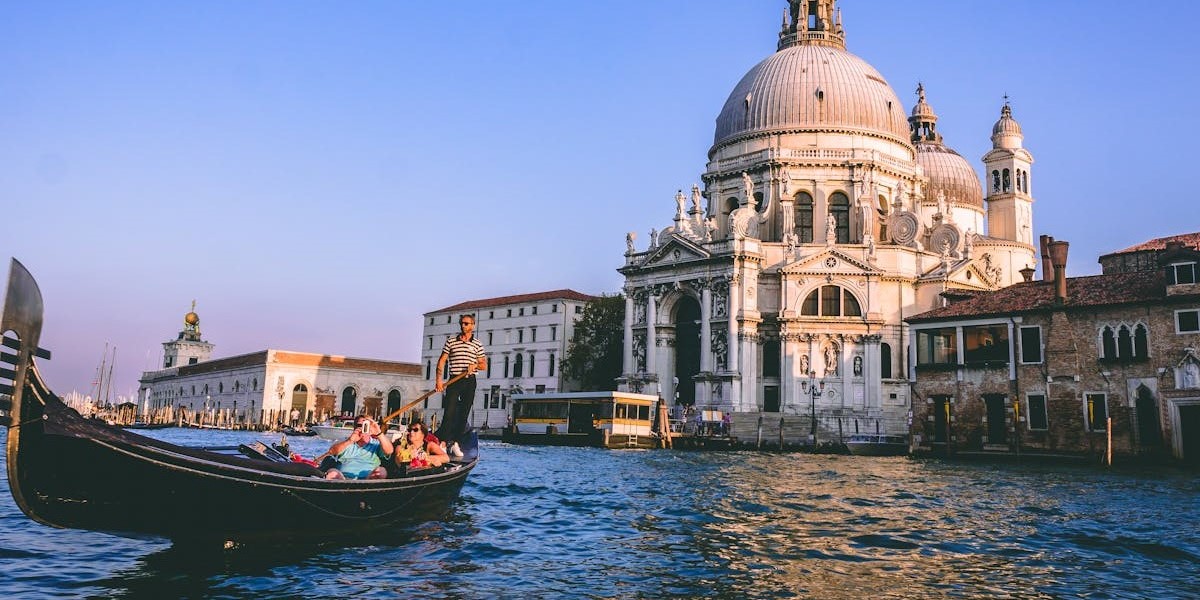
Marco Polo: the natural private-jet gateway to Venice
For Venice, Venice Marco Polo Airport (VCE / LIPZ) is the first choice for most private flights. The airport has a dedicated General Aviation environment and specialised handling for private aircraft, with services that can include apron transfers, lounges, baggage handling, catering, flight coordination and onward transport. This matters because Venice is not a conventional city arrival: the journey does not simply end with a car waiting outside the terminal.
Marco Polo sits directly on the lagoon. For a hotel in San Marco, Dorsoduro, Cannaregio or on the Grand Canal, a private water taxi can therefore be both the most elegant and the most practical onward transfer. Passengers and baggage can be connected from General Aviation towards the water dock. For Mestre, Padua, Treviso or a corporate address elsewhere in Veneto, a chauffeur-driven car is usually more logical. We therefore like to know the real final address when quoting; a palazzo on the Grand Canal and a meeting in Mestre require completely different ground planning.
Treviso may appear to be an alternative on a map, but for a classic private-jet trip to Venice, Marco Polo normally provides the strongest combination of runway, international infrastructure, GA services and direct access to water transport. We only compare alternatives when availability, operational restrictions or aircraft positioning create a clear reason to do so.
Light or super light jet: comfortable without over-aircrafting the trip
From the Netherlands, Venice is a relatively short European sector. For two to six passengers, a Light Jet is often an excellent fit. Travellers who want more cabin height, baggage capacity or working space can move up to a Super Light Jet. In broad terms this might mean a Citation CJ-series aircraft at the compact end and a Phenom 300 or similar category when a more generous cabin is preferred. Marco Polo’s long runway makes the airport far less restrictive than a number of smaller Mediterranean leisure airports.
The final aircraft choice is driven mainly by passenger count, baggage and the flexibility required. A weekend for five people with normal luggage can work very well on a compact jet. If the trip includes numerous fashion bags, golf equipment or several large suitcases, the additional baggage volume of a super light jet may justify the difference. For a same-day business visit, a larger cabin can also be useful when passengers want to work comfortably in both directions.
Venice can become exceptionally busy around major events. The Biennale, Film Festival, Carnival and international exhibitions can all put pressure on aircraft parking, slots, hotels and water transfers. Private aviation remains flexible, but early planning becomes particularly valuable on these dates. We ask the operator to confirm handling and parking and, when appropriate, consider a drop-and-go operation in which the aircraft repositions after arrival and returns for departure.
From the Grand Canal to Dorsoduro: where to stay and how to move
For a first visit, San Marco remains convenient, but Venice often becomes more rewarding once the stay moves slightly away from the busiest square. Dorsoduro has a calmer atmosphere and good access to cultural addresses such as the Peggy Guggenheim Collection. Cannaregio feels more residential in many streets and works well for travellers who prefer to avoid the densest visitor flows. Giudecca can also be interesting when privacy and a little distance from the centre are more important than walking everywhere.
Classic high-end stays include Aman Venice and The Gritti Palace. Both sit on the Grand Canal and work especially well when arriving by boat is meant to be part of the experience. Venice’s dining scene is also far stronger than the restaurants immediately around the busiest tourist routes suggest. Glam, Oro and Venissa are examples for a more gastronomic evening, while a smaller bacaro in Cannaregio or San Polo can be the better choice for lunch and cicchetti.
For private-jet travellers, timing on the water deserves attention. A transfer that looks short on a map can depend on the landing stage, traffic on the canals and the precise location of the hotel. Not every property has the same access for a private launch. We therefore prefer to link the transfer to the actual aircraft arrival rather than treating it as a separate booking. For late arrivals we also confirm that the planned boat and hotel access remain practical.
What determines the private jet price to Venice?
The charter price is driven mainly by the chosen Light or Super Light Jet, where the aircraft is positioned before the flight and whether it can remain with the passengers. On a short weekend it may be efficient for the same aircraft to wait; for a multi-day stay it can be cheaper for the aircraft to leave on another mission and for a different suitable jet to operate the return sector. We compare both structures when relevant.
Event pressure, parking and handling can also change the economics. A well-priced aircraft that cannot remain at Marco Polo on a busy date may ultimately cost more once extra positioning sectors are added. This is why we compare the complete mission rather than a headline hourly rate.
The price indication on the destination page is read only from the pre-built Destination Pricing snapshot and appears only when enough comparable historical data exists. For the actual charter we use your exact dates, routing, passenger count and cabin preference. This keeps the aircraft recommendation and any displayed price indication aligned to the same category.