
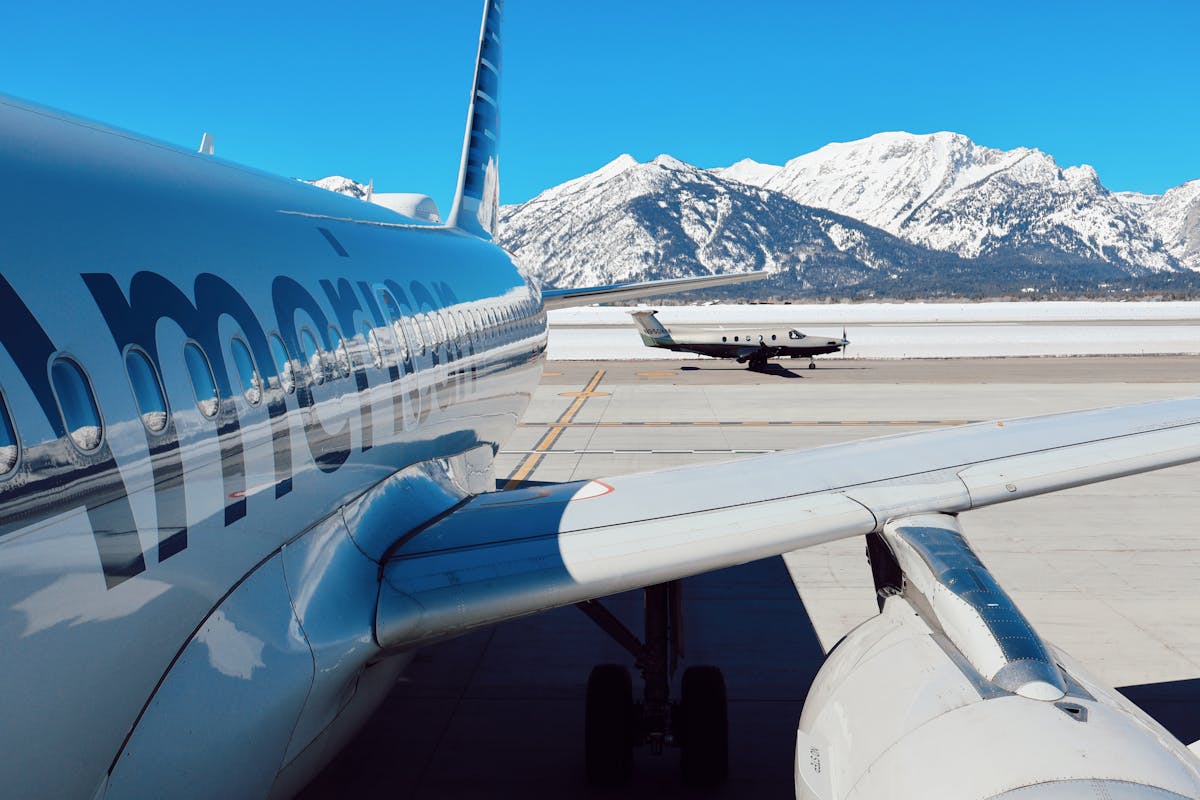
Jackson Hole is compact, high-altitude and operationally demanding
Jackson Hole Airport (JAC / KJAC) is exactly the type of destination where private aviation adds value, but where a larger aircraft is not automatically a better aircraft. The airport sits entirely within Grand Teton National Park at an elevation of 6,451 ft and has a single 6,300-ft runway. The airport itself warns pilots about rapidly changing mountain weather and describes JAC as a challenging operating environment. Aircraft performance therefore matters more than brochure range alone.
The combination of elevation, terrain, temperature and runway length can affect both landing and departure. In summer, higher density altitude reduces performance; in winter, snow, braking action and de-icing become more significant. JAC has modern instrument procedures and safety infrastructure, yet the operator still has to calculate the acceptable landing weight, fuel load and weather margin for every individual flight.
Timing also deserves attention. Jackson Hole publishes a voluntary noise curfew for private aircraft from 21:30 until 07:00 local time. The airport also notes that fire protection and snow-removal services can be limited after hours. We therefore prefer an arrival comfortably within the normal operating window rather than building the itinerary around a very late landing.
A European journey will normally include a US entry stop
JAC is not shown on the current CBP list of general-aviation airports normally available for international private-aircraft arrival processing. For a journey from Amsterdam, we therefore plan the first landing at a US airport with confirmed CBP services and continue to Jackson Hole as a domestic sector. Bangor can be a logical entry point because of its position and 24-hour customs capability, although the best stop depends on winds, routing, crew duty and aircraft type.
That customs stop changes the aircraft discussion. The total Amsterdam–Jackson Hole distance might suggest Heavy or Ultra Long Range on paper, but the practical mission is split into two sectors. A Super Midsize Jet can therefore be particularly attractive: sufficient range for each leg, often sensible JAC performance and a comfortable cabin for four to eight passengers. A Heavy Jet adds baggage space, quietness and range margin, but is assessed type by type against the 6,300-ft runway and high elevation.
The same logic applies on the return. Carrying enough fuel for a long eastbound sector increases take-off weight. In some conditions it is more robust to leave Jackson Hole with less fuel and make a short technical stop elsewhere than to choose an aircraft purely because its brochure range is longer. We discuss these options in advance so the programme still makes sense if temperature or winds differ on the day.
At Jackson Hole, the mission determines the right aircraft
A ski week creates different requirements from a summer lodge trip. Skis, snowboards, winter clothing and multiple suitcases consume a surprising amount of baggage volume. An aircraft with useful external baggage capacity may therefore be more practical than a nominally larger cabin with less accessible storage. For family trips we also compare boarding, lavatory, catering space and cabin height alongside range and runway performance.
JAC has mandatory noise restrictions for older or noisier aircraft and extensive Fly Quiet procedures. Modern charter aircraft are generally in a much more favourable noise category, but the operator still has to comply with the specific aircraft certification and local procedures. Because the airport lies inside a national park, preferred arrivals, departures and overflight considerations are a visible part of the operation.
In changeable winter weather we also identify an alternate before departure. Diversions in this region can create a substantial ground transfer, so the sensible Plan B should be known rather than improvised after an approach becomes unavailable. The value of private aviation here is not only time saving; it is the ability to combine aircraft, airport, customs and weather planning into one executable journey.
Teton Village for skiing, Jackson for dining and summer for the parks
For winter travel, Teton Village is the obvious base when ski-in/ski-out convenience matters. Four Seasons Resort and Residences Jackson Hole sits directly at the mountain and combines skiing with a spa and on-site dining. Travellers who prefer the centre of Jackson can consider Hotel Jackson or another smaller property around Town Square. For dinner, Snake River Grill remains an established Jackson name; in Teton Village, Westbank Grill at Four Seasons is convenient when you do not want another transfer after skiing.
Jackson Hole has two distinct peak seasons. Winter revolves around Jackson Hole Mountain Resort and often significant snowfall; summer is about Grand Teton National Park, wildlife, hiking, fly-fishing and onward travel towards Yellowstone. June through September can therefore be just as busy and exclusive as the major ski weeks. During shoulder seasons some lodges, restaurants and activities close temporarily, while mountain weather can still change quickly.
We match the flight to the stay. A late dinner booking is of little value if the planned arrival runs into the voluntary curfew, and an impressive ULR cabin is not the best solution if runway performance makes the mission unnecessarily fragile. For Jackson Hole, we look for the combination that is operationally strong and genuinely fits the programme on the ground.