
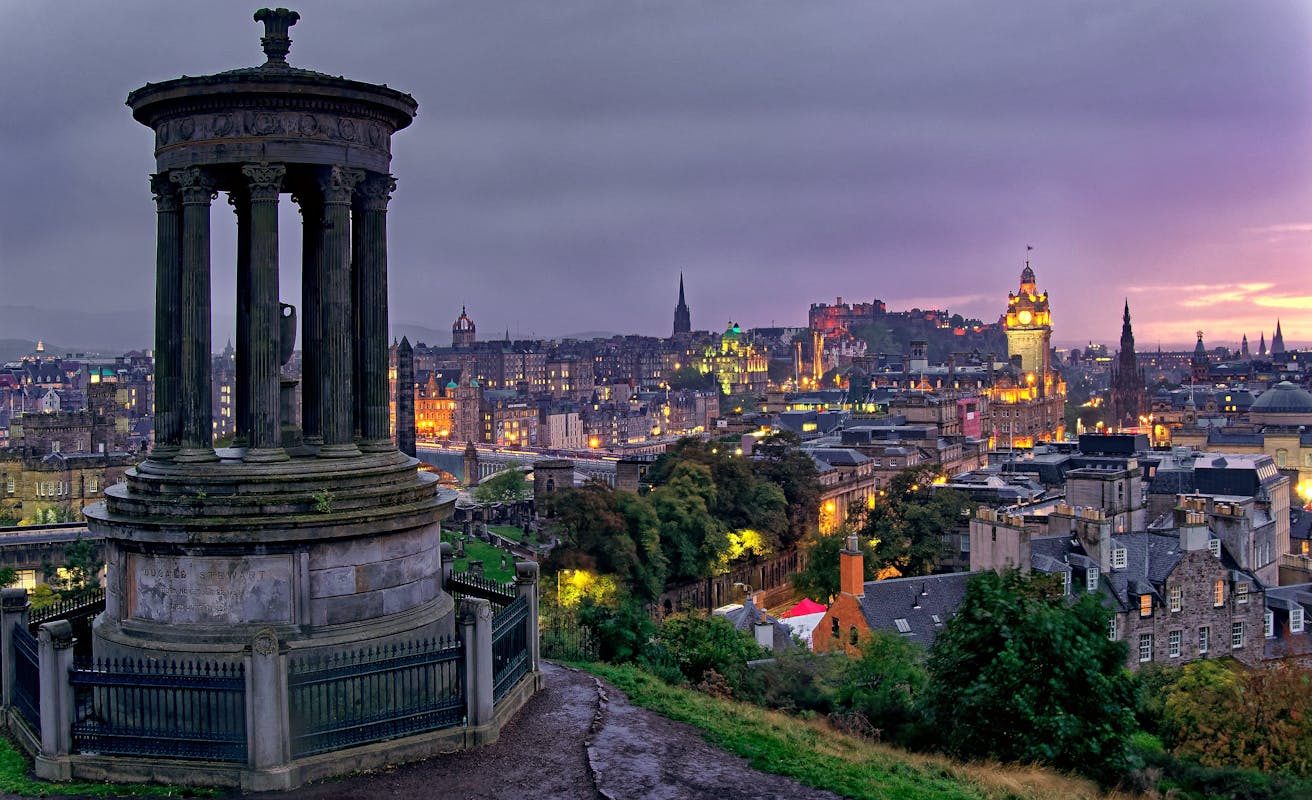
Edinburgh Airport: a straightforward gateway to New Town and Old Town
For a private flight to Edinburgh, Edinburgh Airport (EDI / EGPH) is the natural first choice. It sits west of the city and combines a long runway with dedicated private-aviation services. That works equally well for a corporate appointment in New Town, a weekend around Princes Street and the castle, or a transfer onward to a Scottish golf course. From Amsterdam the sector is short enough for both a modern turboprop and a light jet to make practical sense.
The real advantage is often not the airborne time but the complete journey. Private handling, a pre-arranged car and a direct schedule can make a same-day return realistic. Ground traffic still matters, particularly around the A8 and city centre. During weekday peaks, major rugby fixtures or the festival month of August, the transfer can take noticeably longer than on a quiet weekend.
Edinburgh Airport offers private-jet services through specialist providers including Execair. For each mission we check the handling arrangement, parking position and the most efficient passenger and baggage flow.
Turboprop or Light Jet: choose around comfort, baggage and the day plan
On Amsterdam–Edinburgh, a Light Jet is often the strongest all-round choice. Aircraft in the Citation CJ family or a Phenom 300-type category provide a quick sector, a comfortable cabin and more than enough range. For three to six passengers with normal luggage this is usually the simplest balance between speed and cost. A modern turboprop can be commercially attractive when price matters more than a small time saving, or when the departure airport favours that category.
For golf trips, baggage deserves more attention than the seat count. Golf bags, weekend cases and garment bags can change the most practical aircraft option. If the plan is to continue directly to Gleneagles, St Andrews or a country estate, useful baggage volume may matter more than choosing the fastest jet on paper. A two-person board meeting naturally creates a different requirement.
Scottish weather is another planning factor. Wind, low cloud and winter conditions are not unusual and do not in themselves make Edinburgh difficult, but they can affect routing, alternates and block time. The executing AOC operator therefore verifies current NOTAMs, weather, runway condition and alternates before the final operational plan is confirmed.
A same-day return also needs realistic crew-duty planning. An early outbound and a departure after dinner may be possible, but it is not automatically the most efficient commercial solution. In some cases a later return with the same aircraft is better value than a plan that requires expensive parking or extended crew waiting time.
Where to stay: landmark hotels, New Town and a strong dining scene
For a short stay, New Town is usually the easiest base. The Balmoral stands on Princes Street where Old Town meets New Town and remains a classic choice for recognisable service and central access. Gleneagles Townhouse on St Andrew Square offers a more contemporary combination of hotel, club and city base. Travellers who prefer a quieter residential feel may enjoy Stockbridge and the Georgian streets north of the main shopping area.
Old Town makes more sense when the Royal Mile, Edinburgh Castle and historic atmosphere are central to the trip. Its narrow streets are part of the appeal, although chauffeur access can be less straightforward than in New Town. For tightly timed business travel, the area around George Street and Charlotte Square is often easier. Leith brings a strong restaurant scene and a more local atmosphere, but adds ground time if most meetings are in the central business district.
Edinburgh also rewards travellers who plan dinner properly. Restaurants such as Lyla and The Kitchin are well-known high-end choices, while The Balmoral and Gleneagles Townhouse provide convenient options for lunch, dinner or an informal meeting. With a late private flight, we prefer to build a sensible buffer between the restaurant and airport rather than turning the end of the evening into a rushed transfer.
Golf can turn Edinburgh into the first point of a wider Scottish itinerary. Gleneagles is outside the city and St Andrews lies further north-east. In that case the airport should be considered as part of the full journey: arriving through Edinburgh, spending several nights in the countryside and perhaps departing from another Scottish airport can be more efficient than forcing the entire programme into a return through EDI.
Festivals, rugby and golf: book early when the city fills
Edinburgh works throughout the year, but demand has very clear peaks. In August, the International Festival and Fringe bring huge visitor numbers; premium hotels, chauffeurs and restaurants can sell out long before the travel date. Hogmanay, international rugby fixtures and major golf weekends can also tighten aircraft and crew availability.
For those dates we recommend securing the ground plan as well as the aircraft. A private jet cannot solve a fully booked hotel or the absence of a suitable chauffeur. Leisure journeys therefore work best when flight, hotel and transfer are treated as one itinerary. Outside the busiest events, Edinburgh is an excellent destination for relatively spontaneous private travel.
Charter pricing is not taken from a fixed tariff. Aircraft position in the Netherlands or Belgium, positioning sectors, airport and handling charges, waiting time and the return schedule all shape the final number. When the separate Destination Pricing snapshot contains enough comparable historic data, the website may show an indicative range. The live proposal is still based on aircraft that are actually available for the requested date.
When requesting a flight, tell us about golf bags, larger cases, pets and the wider Scottish programme as well as the passenger count. That allows us to decide whether a turboprop, Light Jet or roomier alternative fits best and whether Edinburgh should remain the airport for both arrival and departure.