
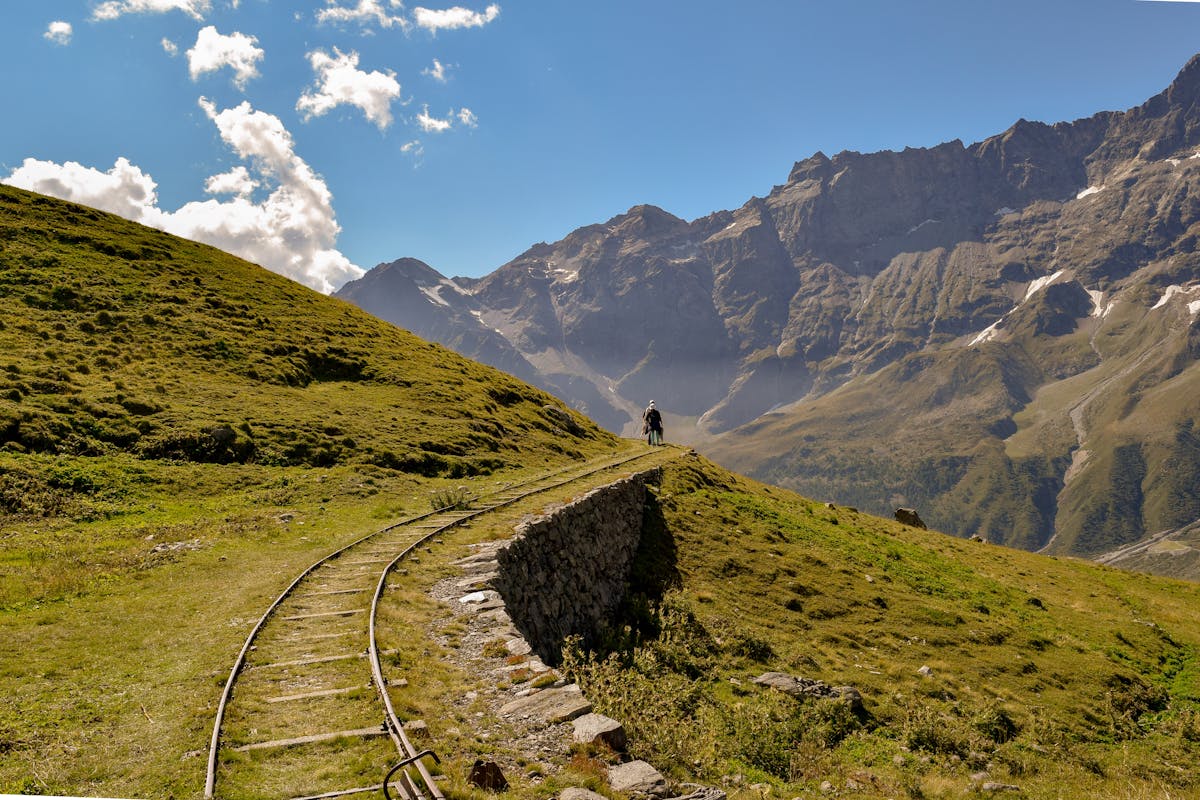
Corrado Gex: arrive inside the Aosta Valley instead of driving into it
For a private flight into the region we use Aosta Corrado Gex Airport (AOT / LIMW), immediately east of Aosta. The regional authority confirms that the airport is open to domestic and international air traffic. Its runway has been extended to approximately 1,499 metres; older datasets still show the former 1,240-metre length, but the destination data now reflects the extended runway.
The benefit is geographical above all. From larger alternates such as Turin, Milan or Geneva you still have a substantial motorway and mountain-road transfer ahead. From AOT you are already in the valley. Aosta town is only a short drive; Courmayeur lies west towards Mont Blanc, while Cervinia is reached through the side valley towards Valtournenche. On a short ski weekend, that saved road time can be the difference between a relaxed arrival and losing half a travel day.
The airport is small and its infrastructure is naturally less extensive than that of a major international airport. The region is also continuing terminal development. We therefore verify handling, customs and immigration, fuel, fire category, current NOTAMs and required operational services for each mission. At Aosta, “can the aircraft land?” is only the first question; “can the complete commercial flight be operated on this date?” is the one that matters.
Turboprop or Light Jet: mountain operations require more than a runway number
For Amsterdam – Aosta we initially recommend a Turboprop or Light Jet. A PC-12 or King Air-type aircraft can be particularly attractive at a mountain destination because of runway performance, useful baggage capacity and efficiency on a short sector. A suitable Light Jet adds speed and jet-cabin comfort and can also work very well, but the exact performance needs confirmation for the specific flight.
The approximately 1,499-metre runway does not tell the full story. Aosta sits at roughly 546 metres elevation and is surrounded by high Alpine terrain. Temperature, wind, pressure altitude, runway condition and departure weight all influence margin. A winter weekend for six passengers with skis and full fuel can produce a different answer from three passengers with hand luggage on a cool dry day. The operating AOC therefore remains responsible for the final performance calculation.
For some missions a larger airport can still be the stronger choice. If the weather outlook, aircraft availability or local operational support introduces too much uncertainty, we compare Turin or Geneva. That may look less elegant on the map, but reliability outranks a theoretically shorter transfer. A good Aosta proposal therefore includes not only an attractive aircraft but also a credible alternate strategy.
Aosta town, Courmayeur and Cervinia each need a different transfer plan
Aosta itself is more than a transit point. The Roman city has a compact historic centre, Piazza Émile Chanoux and a serious dining scene. Paolo Griffa al Caffè Nazionale sits directly on the main square and is listed in the 2026 Michelin Guide; Vecchio Ristoro is also listed with a Michelin star. A short culinary trip can therefore genuinely mean landing, driving into town within minutes and leaving the car parked for the evening.
For winter leisure, attention shifts to Courmayeur, Cervinia and Cogne. Courmayeur sits beneath Mont Blanc and has a strong luxury-hotel market; Grand Hotel Courmayeur Mont Blanc is a well-known upscale option. Cervinia lies in another direction and requires a longer road transfer than Courmayeur. We therefore ask for the exact resort and chalet before choosing the aircraft, rather than treating “Aosta Valley” as one destination.
Season changes the door-to-door calculation as well. Friday evenings and winter Saturdays can be busy on the roads towards the ski areas, while snowfall makes a pre-booked winter-equipped chauffeur essential. In summer the same region is about hiking, golf, wine, Gran Paradiso and mountain lodges. AOT remains attractive, but warmer temperatures can become more relevant in the runway-performance calculation.
Operational certainty, alternates and the total charter price
At Aosta we prefer to build generous operational margin. That means looking beyond the forecast on the morning of departure: at quotation stage we already consider which operator is comfortable with the field, which services need to be available and which alternate makes sense if conditions change. A plan B is normal at a mountain destination; it is not evidence that the airport is unsuitable, but simply professional risk management.
The charter price is built from aircraft, positioning, handling, any special airport services, parking, crew and winter-related costs. Sometimes the smallest suitable turboprop is exceptionally economical; on another date a Light Jet may already be well positioned in the Netherlands or northern Italy and narrow the difference. For a multi-day stay, the decision between drop-and-go and keeping aircraft and crew on site can also materially affect the total.
Any website price indication is read exclusively from the pre-built Destination Pricing snapshot. The page does not launch live Pricing Intelligence, Flight Advisor or Airport Intelligence. For the actual flight we send current options with total price, conditions and an operational explanation. At Aosta that explanation should always include why the selected aircraft works for runway, payload and weather on the requested date.